Not sure what to fix first?
Most people don’t need another AI tool. They need to know which thing is actually costing them the most.
The AI Bottleneck Finder asks you a handful of questions, then tells you the one constraint capping your revenue right now plus two builds you could ship this week. Five minutes, free, no call required.
Take the free AI Bottleneck Finder →
I stopped using my graphic designer two weeks ago. Not because they weren’t good. They were great. But Claude Code with one MCP server replaced the entire workflow.
Ad creatives. Social media carousels. YouTube thumbnails. Client mockups. All generated from my terminal. No Photoshop. No Figma. No back-and-forth Slack threads with a designer asking, “Is this the right shade of purple?”
I’m Charles Dove. I run CC Strategic, an AI automation agency, and I’ve been documenting this stuff on my YouTube channel @charlieautomates. This particular setup blew my mind enough that I had to break it down for everyone.
What Is the Nano Banana MCP Server?
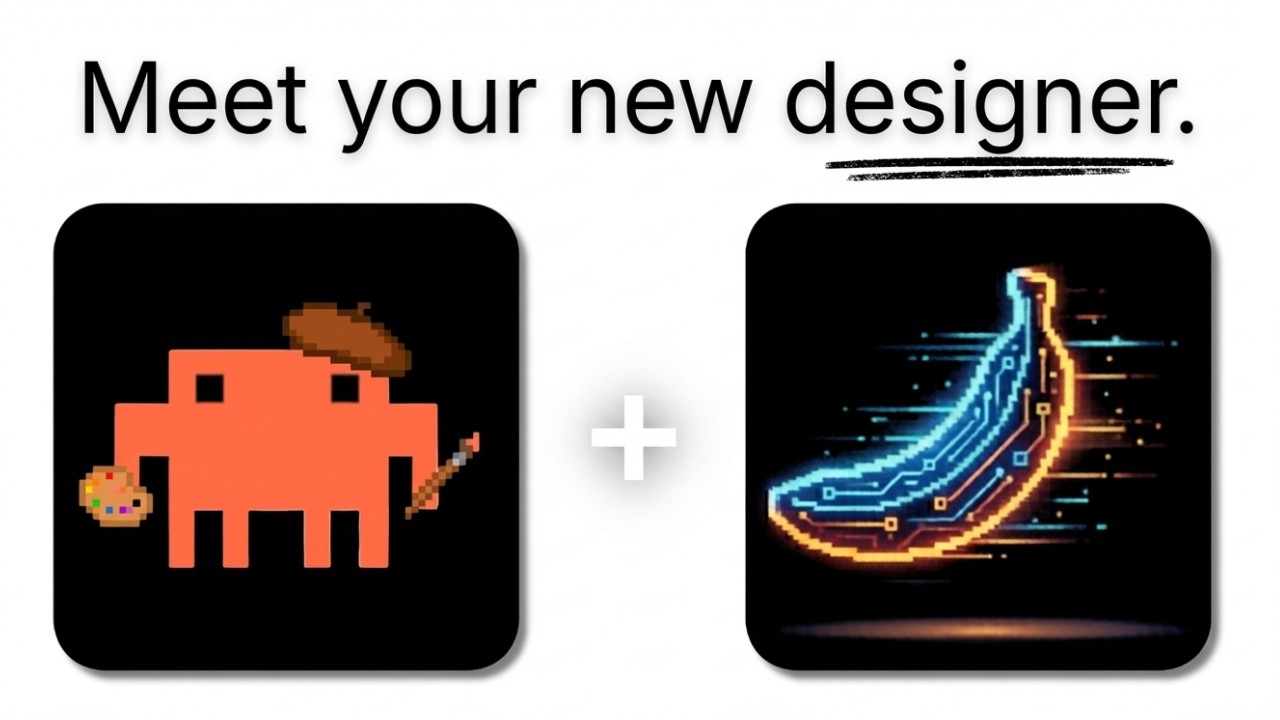
Most people think Claude Code is just for building software. That’s the first mistake. MCP servers and CLI tools turn Claude Code into an everything tool. And the Nano Banana MCP server is proof of that.
Nano Banana is an image generation and editing tool from Google. It’s free on GitHub. Here’s what it can do:
- Generate images from text prompts
- Edit existing images (change backgrounds, add elements, remove objects)
- Iterative editing (keep refining without losing context)
- Style transfers (apply different visual styles)
- Combine elements from multiple images
- Custom aspect ratios (16:9, 4:3, 4:5, 1:1, whatever you need)
That last one matters more than you think. If you’re building a landing page or an app and you need images at specific dimensions, you don’t have to leave your terminal. Production quality images at any aspect ratio. Right there.
Why This Beats the Old Way
Let me explain what the old workflow looked like. It was painful.
I’d fire up something like Higgsfield or Google AI Studio. I’d open ChatGPT in another tab to help me write prompts. I’d copy a prompt, paste it into the image tool, drop in reference images, and hit generate.
Then I’d iterate. Over and over and over again. Every single time, I had to make sure the reference images were the same. The conversation in Higgsfield was losing context with every new image. It had no memory of what we’d already created.
Midjourney was the same story. Context switching is a pain. You’re bouncing between three or four different tools just to get one image right.
Now? I do everything through Claude Code. When I’m building a landing page with PAUL (my iterative dev workflow), my brand context is already loaded. My visual assets are already accessible. When I ask Claude Code to create an image, it already knows my colors, my style, my brand. One place. One tool.
The Demo: Watch Claude Code Generate Images in Real Time
Here’s exactly what I walked through in the video.
Example 1: Tech YouTuber Background
I started with a simple prompt: “Create an image of a premium tech YouTuber’s background from the webcam’s perspective.” I chose 16:9 for YouTube thumbnails, gave it a color combo, and told it I didn’t want any person in the image.
Claude Code didn’t just blast out a random image. It interpreted the prompt. It generated a high-quality detailed prompt behind the scenes. Then it called the Nano Banana tool and generated the image.
The result? Clean. Professional. Looked like something you’d see on a top tech channel.
Then I pushed it further. I told it to add anime memorabilia on the shelves and delete the boom mic. Keep everything else the same.
It kept the same image. Same composition. Same lighting. Just swapped out what I asked for. That’s not generation. That’s editing. Inside a terminal.
Example 2: Brand Carousel Slide
Next, I had Claude Code use my brand context file. This file has everything about Charlie Automates: my company info, my colors, my fonts, my style preferences.
I told it to create a 4x3 carousel slide based on the concept of the video I was making. I even gave it a reference of a previous winning carousel that I’d used before.
Here’s where Claude Code pulls ahead of every standalone image tool. It’s not one-shotting prompts. It’s working WITH you. It reads your brand context. It studies your reference images. It understands the goal.
I accidentally used the wrong aspect ratio. No problem. I told Claude to edit it to 4x5 instead. It adjusted without losing any of the work. The result was extremely close to my original reference. That’s consistency you can’t get from jumping between tools.
Example 3: Facebook Ad Creative
For the final test, I had it create a 1:1 ad creative for a Facebook ad promoting my Skool community.
I used a custom skill I built called “Thumbnail Packager.” This skill has all my philosophy on creating high-converting images baked in. The Four C’s framework. Element limits. Quality scoring.
I told Claude Code: three elements max, with a specific desired outcome for the copy. And I wanted it to follow my brand context.
Claude Code read my Skool brand files. It understood the community context. It followed my color palette. It created the prompt. And it delivered an image that followed all three constraints.
Here’s the kicker. The Thumbnail Packager skill rates every image. If it’s above an 8, it’s post-ready. If not, we keep iterating. Automated quality control built into the workflow.
The Canva Stack: Where It Gets Dangerous
Nano Banana plus Claude Code is powerful by itself. But when you stack it with Canva, things get scary good.
Here’s the move. You take the image Claude Code generated and paste it into Canva. Then you hit the edit button and use the new feature called Magic Layers.
You might have seen Canva’s background remover before. Magic Layers takes that further. It makes every single piece of the image editable. Text becomes editable text. Objects become movable layers. The background separates from the foreground.
So now you can:
- Move individual elements around
- Edit text directly in Canva
- Swap out backgrounds
- Save individual pieces as reusable assets
- Drop them into proven Canva templates you already have
This is the workflow that changed everything for me. Claude Code generates the raw image with the right brand context. Canva gives me scalpel-level editing to polish it.
Real Example: YouTube Thumbnail Remix
I grabbed one of my existing YouTube thumbnails from a previous video. I fed it to Claude Code along with a Nano Banana MCP server image. I told it: “Do a this-plus-that. Change the title. Change the background colors to fit my brand context.”
Claude Code generated the new composite thumbnail. Then I brought it into Canva, hit Magic Layers, and edited the text to fit perfectly. I moved elements around. I adjusted spacing.
Back and forth between Claude Code and Canva. Generate, layer, edit, generate again. It’s a full creative production pipeline.
The Pro Tip: Reference Images Are Everything
Before you install anything, hear this. The quality of your output depends on the quality of your references.
Go to Facebook Ad Library. Look for winning ad creatives in your niche. Study YouTube thumbnails from channels that are crushing it. Screenshot the ones you want to model.
Then feed them to Claude Code as references. Tell it what you want to create. Let it analyze the composition, the colors, the layout. Then generate something in your brand style that follows those winning patterns.
You’re not copying. You’re learning from what works and applying it to your brand. That’s smart design.
How to Install the Nano Banana MCP Server
The setup takes about five minutes. Here’s the step-by-step.
Step 1: Give Claude the Repo
Open Claude Code. Give it the Nano Banana MCP server repo link from GitHub. Tell it to set it up for you. Claude Code will handle the installation.
Step 2: Get Your Google API Key
While Claude is installing, go to Google AI Studio. Log in with your Google account. Go down to “Get API Key.” Create a new API key. Name it whatever you want. You don’t need to worry about setting up a project.
Click “Create Key” and copy it.
Step 3: Set Up Billing
You need billing enabled to use Nano Banana Pro through the API. Here’s the good news: Google often offers a free trial with credits if you’re setting up a new Cloud Console account.
Go to console.cloud.google.com. Create an account if you don’t have one. You should get a free trial with a generous amount of credits. Even without the trial, Nano Banana costs maybe 5 to 10 cents per image. It’s nothing.
Make sure the Google AI Studio account and the Cloud Console account are the same Google account. Attach billing, and you’re set.
Step 4: Give Claude the API Key
Claude Code will ask you for the API key during setup. Paste it in. Tell Claude to plug it into the correct ENV file. That’s the environment variable that connects Claude Code to the Nano Banana API.
Step 5: Start Generating
Open a new Claude Code session. Ask it to generate an image. Pick your aspect ratio. Feed it reference examples if you have them. You’re live.
Why This Stack Matters for Your Business
This isn’t just about making pretty pictures. This is about eliminating context switching.
Every time you jump from your code editor to Midjourney to Canva to ChatGPT and back, you lose momentum. You lose context. You lose time. And if you’re running a business, time is the most expensive thing you have.
With this stack, you stay in one tool. Claude Code has your brand context. It has your file system. It has your reference images. It has your custom skills that enforce quality standards. You generate, iterate, and export without ever leaving your workflow.
For me at Charlie Automates, this means I can produce content faster. My thumbnails match my brand every time. My ad creatives are consistent. My social media posts look professional. And I didn’t have to open a single design tool to start.
The Bigger Picture: Claude Code as the Everything Tool
Every day there are new MCP servers and CLI tools coming out. Terminal tools with Claude Code are becoming the everything tool.
Image generation is just one example. With the right MCP servers, Claude Code can send emails, manage your CRM, edit videos, browse the web, run your social media. The people who learn to stack these tools now are building real competitive advantages.
I’m not saying fire your entire creative team tomorrow. But I am saying this: the gap between “person with Claude Code and the right MCP servers” and “person without” is getting wider every single day.
If you want to go from a level one Claude Code user to level five, where you’re building full end-to-end applications that generate revenue, consider joining the CC Strategic AI community on Skool. Templates, workflows, and tools are inside.
Want it Done-For-You? Charlie OS is the DFY Claude Code setup with all my skills, plugins, and frameworks installed for you. Click the VIP option inside Skool to grab it.
Frequently Asked Questions
Is the Nano Banana MCP server free?
The MCP server itself is free and open source on GitHub. You will need a Google API key with billing enabled to generate images. Google often offers a free trial with credits for new Cloud Console accounts. Without the trial, images cost roughly 5 to 10 cents each.
Do I need to know how to code to use this?
No. If you can use Claude Code at all, you can use this. The installation is handled by Claude Code itself. You give it the repo link, it sets everything up. You just need to provide the API key.
How does this compare to Midjourney?
Midjourney produces great images. But it’s a standalone tool. Every time you use it, you’re context switching away from your main workflow. With Nano Banana inside Claude Code, your brand context, file system, and reference images are all right there. Claude Code also helps you write better prompts because it understands your project.
Can I edit images I’ve already created?
Yes. That’s one of the biggest advantages. You can feed an existing image to Claude Code and tell it to modify specific elements. Change the background. Remove an object. Add new elements. It’s not just generation. It’s a full editing workflow.
What aspect ratios does it support?
All of them. 16:9 for YouTube thumbnails. 4:5 for Instagram. 1:1 for Facebook ads. 4:3 for carousels. Custom ratios too. You just specify what you want in your prompt.
What’s the Magic Layers feature in Canva?
Magic Layers is a newer Canva feature that separates every element of a pasted image into individual editable layers. Text becomes editable text. Objects become movable. Backgrounds separate. It turns a flat image into a fully editable design. This is what makes the Claude Code plus Canva stack so powerful.
Do I need a paid Canva account for this?
The basic paste-and-edit workflow works with free Canva. Magic Layers and some advanced editing features may require Canva Pro. Check Canva’s current feature availability for your plan.
What is the Thumbnail Packager skill?
It’s a custom Claude Code skill that Charles built for creating high-converting images. It includes the Four C’s framework for visual composition, element count constraints, and an automated quality rating system. If an image scores above an 8 out of 10, it’s post-ready. If not, Claude keeps iterating. It’s available inside the CC Strategic AI Skool community.
Can I use this for client work?
Absolutely. If you’re running an agency or doing freelance design work, this stack cuts production time dramatically. Generate images in your client’s brand context, iterate fast, polish in Canva, and deliver. It’s how we operate at CC Strategic for our own client projects.
What other MCP servers work well with this?
The Go Viral Bro plugin (also built by Charles) pairs well with this stack. It helps you find winning content ideas, analyze competitor videos, and create hooks. Combined with Nano Banana for visuals and Canva for polish, you have a full content production pipeline.
You can pull Open Design from Free Resources at no cost, alongside the full library of skills and playbooks I build with.
Not sure what to fix first?
Most people don’t need another AI tool. They need to know which thing is actually costing them the most.
The AI Bottleneck Finder asks you a handful of questions, then tells you the one constraint capping your revenue right now plus two builds you could ship this week. Five minutes, free, no call required.